Answering the Questions People Ask About Drain Cleaning in Sapopemba
By the end of this article, you will know exactly what to ask, what to expect, and what to avoid when you need a desentupidora Sapopemba service. I teach this material to beginners, and the fastest way to learn it is to follow a real sequence of events: the first call, the diagnosis, the work itself, the bill, and the lessons that keep you from calling again next month. Sapopemba is a dense, mixed residential and commercial district in São Paulo’s east zone, and the plumbing problems there have a rhythm of their own. Below is the narrative I walk my students through, in the order things actually happen.
What Actually Happens When You Call a Drain Cleaning Service in Sapopemba
The first thing beginners get wrong is imagining that the call is a formality before the real work starts. In practice, the call is where most of the outcome is decided. A good dispatcher asks what is backing up, where, for how long, and whether it is one fixture or several. Those four answers determine whether you get a simple drain snake, a high-pressure jetter, or a full sewage line inspection. If you answer vaguely, you will get a vague visit.
When people search for a desentupidora Sapopemba São Paulo SP, they are usually in one of three states: a slow drain that has been ignored for weeks, a sudden backup that floods a floor, or a recurring smell that no one can locate. Each state leads to a different first question. For a slow drain, the technician wants to know how long it has been slow and whether chemical products have been poured in. For a sudden backup, the priority is shutting off water and protecting the floor. For a smell, the investigation starts at the traps and the vent stack, not the drain itself.
The First Call: What to Say and What to Have Ready
Before you dial, write down four things: the address with the nearest cross street, the type of property, the number of fixtures affected, and whether the problem is wastewater or clean water. Sapopemba has many older terraced houses and low-rise commercial buildings where the original clay or cast-iron lines have been patched over the decades. Knowing the approximate age of the building helps the technician choose the right tool and avoid damaging fragile pipe joints.
Ask three questions on the call itself. First, is there a call-out fee and does it count toward the service? Second, what is the expected arrival window? Third, will the technician confirm the diagnosis and price before starting work? A company that cannot answer these three plainly is a company that will surprise you later. The desentupidora em Sapopemba São Paulo SP model that works best is the one that quotes after inspection, not before.
Arrival and Diagnosis: The Part Most People Skip
When the technician arrives, the visit should begin with questions, not tools. A competent professional will ask what changed recently: a new appliance, a renovation, heavy rain, a party, a tree removed nearby. In Sapopemba, root intrusion is a common cause in streets with mature trees, and grease buildup is common behind commercial kitchens. The diagnosis is a process of elimination, and your answers shorten it.
The inspection itself may involve a manual snake, a camera, or a listening device. A camera inspection is worth requesting when the same line has backed up twice within a year, because it distinguishes between a localized clog and a collapsed or root-invaded pipe. A repeat blockage is a symptom, not a coincidence. If the technician proposes a camera and you decline, you are choosing to treat the symptom again.
Choosing the Method: Snake, Jetter, or Something Else
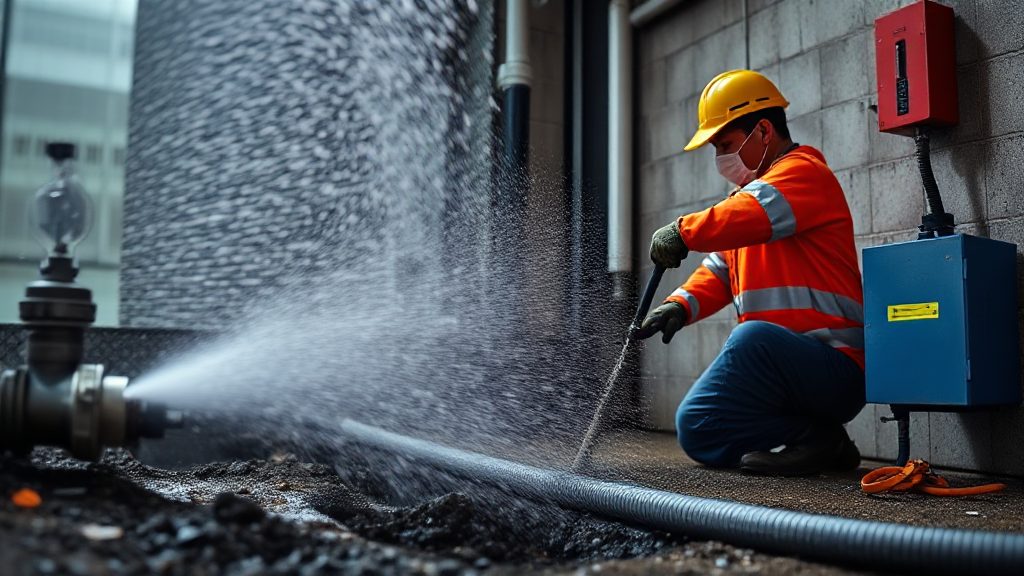
There are three main tools in residential and light commercial drain work, and each has a job it does well. The drain snake, or auger, cuts through soft blockages and is the right choice for a single fixture with a nearby clog. The high-pressure jetter uses water at controlled pressure to scour the pipe walls and is the right choice for grease, scale, and long horizontal runs. The vacuum truck is used for septic tanks and grease traps, not for the line itself.
| Method | Best For | Watch Out For |
|---|---|---|
| Drain snake / auger | Single fixture, soft blockage, short run | Can damage fragile clay joints if forced |
| High-pressure jetter | Grease, scale, long horizontal lines | Requires correct pressure for pipe material |
| Camera inspection | Repeat blockages, suspected collapse | Diagnostic only; does not clear the line |
| Vacuum truck | Septic tanks, grease traps | Not a substitute for line cleaning |
The mistake beginners make is assuming the most powerful method is always the best. A jetter used at the wrong pressure on old clay pipe can open a joint that was already weak. A snake used on a grease-packed line will punch a hole and leave the rest of the wall coated, so the clog returns in weeks. The right method follows the diagnosis, not the other way around.
Executing the Work: What You Should See and Hear
During the work, you should see floor protection, gloves, and a clear explanation of what is being done. You should hear the technician tell you when the blockage breaks, because the sound changes and the water level drops. If the line is cleared, the technician should run water through every affected fixture to confirm flow, not just the one that backed up.
Ask for the before-and-after evidence. A camera recording or a short video on a phone is now standard practice and costs nothing. Evidence of the cleared line is your protection against a repeat visit charge. If the technician cannot show you the line is clear, you have no way to know whether the work was completed or just interrupted.
Costs and Trade-offs: What Drives the Price
There is no single price for drain cleaning, and anyone who quotes one over the phone without seeing the property is guessing. The price is driven by access, depth, pipe material, time of day, and the method used. A ground-floor kitchen drain with a clean-out is a short job. A second-floor bathroom line with no accessible clean-out, or a commercial grease line under a slab, is a longer job with more equipment.
Emergency and night calls carry a premium, which is fair because the crew is working outside normal hours. What is not fair is a price that changes after the work begins without a new explanation. Ask for the price in writing before the tools come out, and confirm what happens if the first method fails. A professional will tell you the fallback plan and its cost before starting, not after.
Common Mistakes That Turn a Small Clog Into a Big Bill
The most expensive mistake is chemical drain cleaner. It rarely clears a full blockage, it can damage older pipes, and it creates a hazardous environment for the technician who arrives later. The second most expensive mistake is ignoring a slow drain for months, because slow drains are early warnings and sudden backups are the bill for ignoring them.
Other common errors include flushing wipes and hygiene products, pouring cooking grease down the sink, and planting trees too close to the sewer line. In Sapopemba’s older streets, the connection between the property and the public network is often the weak point, and roots find it. Prevention is cheaper than any emergency call. A yearly check on a commercial grease line and a simple strainer on every sink will prevent most of the calls I see beginners make.
Prevention and Maintenance: The Calendar That Works
For a house, the maintenance calendar is simple. Strainers on all sinks and showers, no grease down the drain, no wipes in the toilet, and a visual check of the clean-out caps twice a year. For a condominium, add a yearly jetting of the main horizontal lines and a grease trap service for any commercial kitchen. For a restaurant, the grease trap interval depends on volume, but monthly is common and cheaper than a closure.
- Keep a simple log of every backup, the date, the fixture, and the method used.
- Mark the location of clean-outs so the next technician does not have to search.
- Schedule preventive jetting in the dry season, not during a crisis.
- Keep the contact of a 24-hour service in the building’s emergency list.
The log matters more than people think. When a line backs up a third time, the log tells the next professional where to look and which method already failed. Without it, every visit starts from zero and you pay for the same diagnosis repeatedly.
What to Ask Before You Hire Anyone
The questions that separate a professional from an opportunist are few. Ask whether the company has a fixed call-out fee, whether the technician carries a camera, whether the price is confirmed before work, and whether there is any written guarantee on the service. Ask for the company’s registration and a contact number that answers after hours, because the emergency is rarely during business hours.
Also ask what the technician will do if the blockage is in the public network rather than the private line. That situation requires a different conversation with the utility, and a good company will tell you so instead of charging you to discover it. Finally, ask for a receipt and a short written description of the work. A receipt is the difference between a service and a favor.
Frequently Asked Questions, Answered Plainly
How long does a typical visit take? A single-fixture clog with an accessible clean-out is usually under an hour. A main line with a camera inspection or jetting can take two to three hours. A septic tank pump-out is a half-day job depending on access.
Can I stay in the property during the work? Yes, but keep children and pets away from the work area, and expect some noise and moisture. If the technician uses a jetter, water spray is normal and floors should be protected.
What if the problem returns the next day? A return within days usually means the line was not fully cleared or the cause was not addressed. Call the same company and ask them to review the camera footage. A reputable company will return to verify rather than charge a new diagnosis.
Is night service more expensive? Usually yes, and that is reasonable. Confirm the night rate on the first call so the premium is not a surprise. If the backup is not flooding, waiting until morning can save money without risk.
Lessons From the Sequence
The pattern I teach beginners is the same every time: the call sets the expectation, the diagnosis sets the method, the method sets the price, and the evidence sets the trust. When any of those four steps is skipped, the next call is more expensive. Sapopemba’s mix of older homes and busy commercial streets makes those steps more important, not less, because the pipes are older and the access is tighter.
The result you should have by the end of this article is a clear script for your next plumbing emergency. You know what to say on the call, what to ask before the tools come out, which method fits which symptom, and how to prevent the repeat visit. That is the whole skill. Everything else is practice.