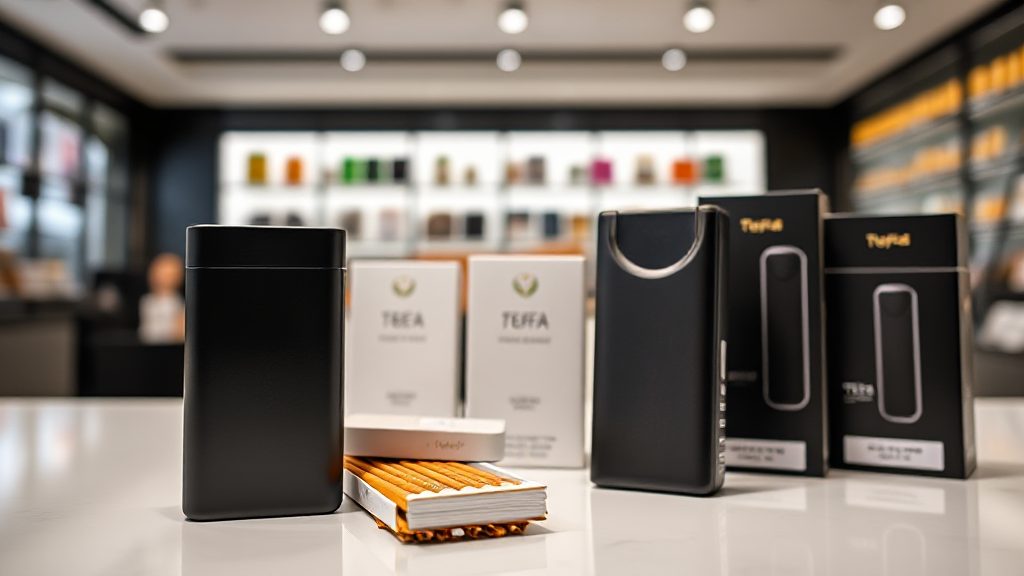
TEREA Carton Value: What You Pay For and What You Get
The most common mistake buyers make with a TEREA carton is judging it by the price on the label alone. A carton is a multi-pack purchase, so the real question is not whether it costs more than a single pack, but whether the per-pack cost, freshness and convenience justify buying in bulk. If you are comparing options, a TEREA carton is best understood as a value decision rather than a single purchase.
This analysis breaks down the problems buyers actually run into, and the fix for each one, so the cost you see matches the value you get.
Problem one: comparing carton prices without a per-pack baseline
The first trap is sticker shock. A carton carries a higher total price than a single pack, and buyers often stop there without converting it into a per-pack figure. That makes an economical purchase look expensive and a cheap-looking single pack look like the better deal.
The fix is simple arithmetic. Divide the carton price by the number of packs inside, then compare that figure against the single-pack price you would otherwise pay. This is the only apples-to-apples comparison, and it usually reveals that the bulk format is the lower-cost route per pack.
What actually drives the per-pack cost
Several factors move the number up or down, and none of them is visible from the carton price alone:
- Pack count per carton — the divisor that determines your true unit cost.
- Shipping and handling — a fixed cost that spreads better across a larger order.
- Flavour and variant — some variants are priced differently from others.
- Retailer pricing policy — the same format can vary between shops.
Once you know the per-pack figure, the carton stops being a vague bulk purchase and becomes a measurable value proposition.
Problem two: buying more than you can use before freshness fades
Bulk buying has a hidden cost: time. Tobacco sticks are a consumable, and a carton that sits around for months is money tied up in product you may not use at the rate you expected. Buyers who smoke or heat only occasionally often overestimate how quickly they will work through a multi-pack.
The fix is to match the carton size to your actual consumption pattern. Estimate your weekly use, multiply by the number of weeks you are comfortable storing, and buy the format that fits that window. If your use is light, a smaller format may deliver better value than a large carton simply because nothing is wasted.
Storage habits that protect your purchase
How you store the sticks matters as much as how many you buy. Keep them in a cool, dry place, away from direct sunlight and strong odours, and keep the individual packs sealed until you open them. A carton stored well holds its condition far better than loose packs left out in a warm room.
This is the part of carton value that rarely appears on a price tag, but it directly affects what you actually get from the money you spend.
Problem three: assuming every carton is the same product
Not all cartons are interchangeable, and buyers who treat them as generic bulk boxes end up with the wrong variant. TEREA sticks come in different flavour profiles and are designed for use with the matching heat-not-burn device family. Buying a carton without checking compatibility is one of the most expensive mistakes in this category.
The fix is to confirm three things before you buy: the flavour profile you want, the device family the sticks are intended for, and the pack count in the carton. A carton is only good value if every pack inside is one you will actually use.
Flavour and variant: the real cost of guessing
Guessing on flavour is expensive at carton scale. A single pack mistake costs you one pack; a carton mistake costs you the whole box. If you are trying a new variant, buy a smaller quantity first, confirm you like it, and only then move up to the multi-pack format.
Treat the first carton as a commitment, not an experiment. That single habit prevents most of the waste buyers report in bulk purchases.
Problem four: ignoring the total landed cost
The carton price is not the full cost. Delivery charges, payment method, and any minimum order thresholds all change what you actually pay. A carton that looks cheaper at the product level can end up costing more once shipping is added, especially for small orders.
The fix is to calculate the landed cost: product price plus delivery plus any fees, divided by the number of packs. Compare that final figure across retailers rather than comparing headline prices. This is also where buying a carton in one order beats buying several single packs across separate orders, because the fixed delivery cost is paid once.
Where to check the numbers before you commit
Reputable shops publish clear delivery terms and secure payment options, which lets you estimate the landed cost before checkout. Look for a retailer that serves your region with predictable delivery, so the carton arrives in good condition and on schedule rather than sitting in transit.
For buyers in Italy and across Europe, the practical route is to compare the per-pack figure including delivery, then choose the format that gives the best landed value for your usage.
Problem five: buying from sellers who cannot guarantee what is in the box
Carton purchases concentrate risk. When you buy several packs at once, you are trusting the seller on authenticity, condition and packaging. Sellers with unclear sourcing or poor packaging turn a value purchase into a loss, because damaged or misdescribed cartons are difficult to resolve after delivery.
The fix is to buy from established retailers with transparent product listings and secure payment. Check that the listing states the variant and pack count clearly, that the shop describes its delivery coverage, and that payment is handled through a secure method. These signals matter more at carton scale than they do for a single pack.
A quick pre-purchase checklist
- Confirm the flavour and device compatibility.
- Check the pack count and calculate the per-pack price.
- Add delivery and estimate the landed cost.
- Verify the shop’s delivery area and payment security.
- Match the carton size to your realistic usage window.
Running this list takes a couple of minutes and prevents the most common and costly carton mistakes.
Problem six: treating the carton as the only option
The final mistake is assuming bulk is always better. A carton wins on per-pack cost, but it is not automatically the right format for every buyer. Someone who uses sticks occasionally, or who wants to try several flavours, may get better overall value from smaller quantities even at a slightly higher unit price.
The fix is to think in terms of total value rather than unit price alone. Value includes what you use, what you store, and what you avoid wasting. A carton is the strongest choice when you have a settled flavour preference and a steady usage rate; it is a weaker choice when either of those is uncertain.
Matching the format to the buyer
As an analyst comparing the alternatives, the pattern is consistent. Regular users with a fixed flavour get the clearest benefit from the carton format, because the per-pack saving compounds with every box. Occasional users and first-time buyers of a variant get better results by starting smaller and scaling up once the preference is confirmed.
Either way, the decision should rest on the per-pack cost, the landed cost, and your realistic usage — not on the headline price of the box. Get those three numbers right and the carton becomes a straightforward value calculation rather than a gamble on a bulk purchase.